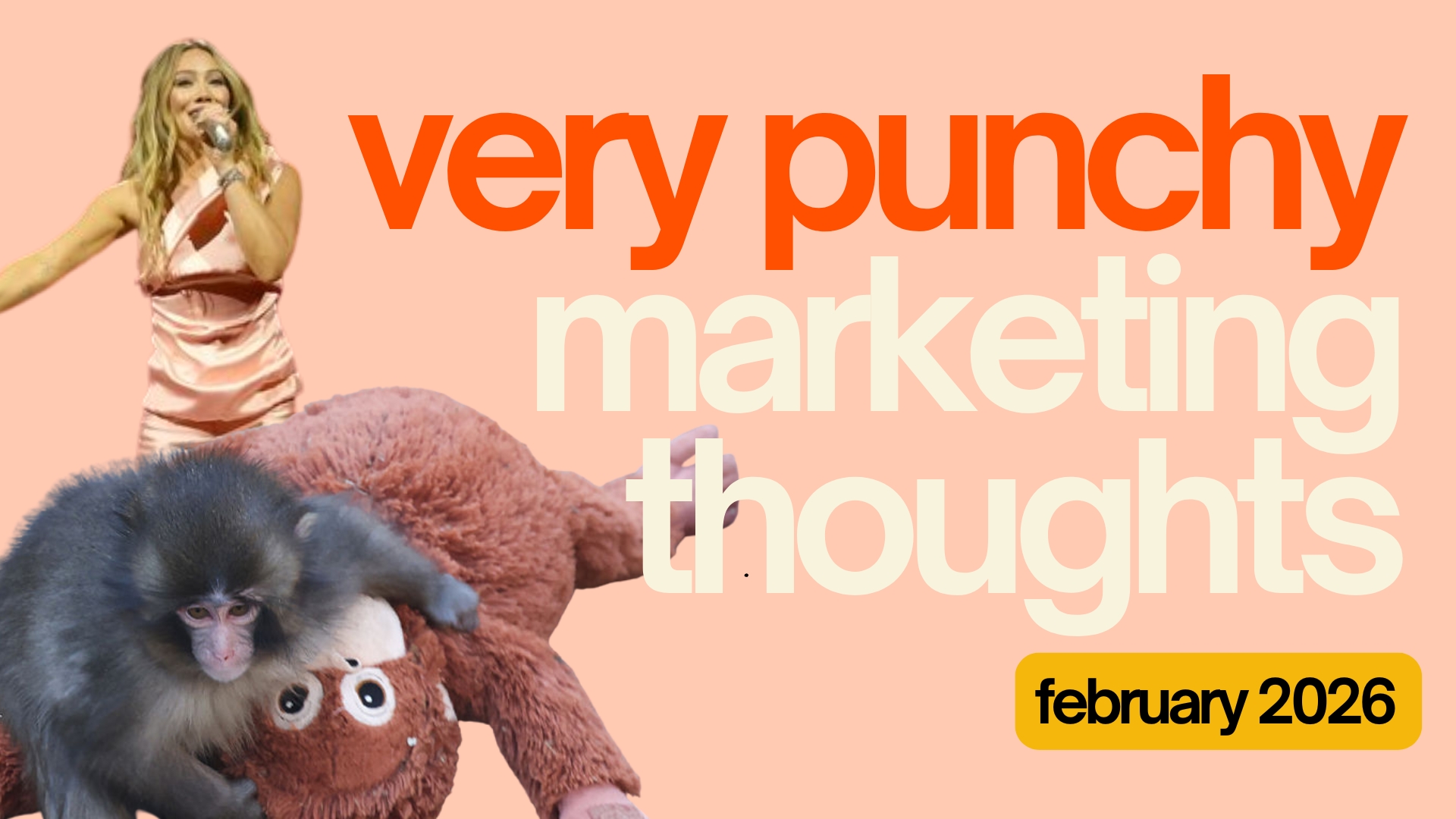
Well well well, it’s March. HOW is it March? I know this is the least original opening thought of all time, but I genuinely feel like I just packed away the xmas tree and now people are talking about Q2 strategy decks. Is it because Feb is only 4 weeks long? Can 3 days really make a difference? Unsure. But alas, here’s the month’s marketing thoughts!
hilary duff: ticketing trauma & marketing done right
Okay so I have two very conflicting feelings about the Hilary Duff tour situation as both a marketing brain and a very very very very big duff-fan.
Starting with the ticketing experience, which I can only describe as mildly traumatic. There were so many layers to it that you needed a spreadsheet to keep track. Standard Ticketek sale. A merch pre-sale where you could unlock early access (yes, I bought a CD; no, I do not own a CD player). A Vodafone pre-sale. A Mastercard pre-sale. A Live Nation pre-sale. Then finally general admission. All staggered. All with their own waiting rooms. All with just enough confusion to make you question your life choices. Perth opened hours after Sydney and Melbourne, and so if you tried to sit patiently in the Perth queue before it opened you’d be spat into the Sydney/Melb ticket purchase options which timed out after 10 mins and then get sent to the back of the 100k long line for Perth (btw our arena holds 15k people lol). It felt like digital survival of the fittest.

PS – I did get tickets, so you don’t have to worry about my mental state i am A OKAY.
From a strategy perspective, I understand it. Drive merch sales. Create urgency. I am literal proof that it worked because I panic-bought a CD purely out of fear of missing out. But it does raise that sliiiiiightly uncomfortable question we’ve seen before with artists like Taylor Swift and the whole vinyl variation debate. At what point does rewarding loyalty tip into monetising access? When does clever marketing start to feel a bit unethical??? I don’t have a super black and white answer, but I do find the ethics of modern artist marketing one of the most interesting things, especially when diehard fans are the ones being nudged to spend more.
That said, the reason Ticketek was melting down is because demand is absolutely unhinged (PROPER UNHINGED) – and demand like that doesn’t appear by accident. Hilary Duff’s marketing team are absolutely nailing this comeback era. What I love most is that she isn’t trying to reinvent herself or chase a brand-new demographic. She’s leaning straight into nostalgia. Lizzie McGuire references. A Cinderella Story throwbacks. Self-aware memes. It feels like she’s in on the joke instead of trying to outrun it, and that tone 100% matters.
She knows exactly who she’s speaking to. The 20-year loyalists (aka MEEEEE). The ones who grew up with her. The ones who still know every lyric and dance move. When your audience feels that understood, they show up. They crash Ticketek. They buy CDs they can’t play. They defend you in the comments. It’s nostalgia marketing done properly – not forced, not try-hard, just very, very aligned. And that alignment is why the chaos existed in the first place.
It’s the complete opposite of nostalgic artists who bring out a new album 20 years later and forget what made them popular in the first place (or maybe… actively choose to forget?) – expecting their fans to come to a concert to listen to 14 tracks they’ve never heard before.
Basically the TLDR of this is that my MVP Marketing Team of the month hands down goes to DUFF HQ 🙌 🙌 🙌
punch the monkey & the limits of reactive marketing
If you’ve been anywhere near the internet recently, you’ve probably seen Punch the Monkey. Tiny orphaned monkey. Bullied. Clutching a teddy bear like it’s his entire emotional support system (reason I cried 7+ times last week). The internet collectively lost its mind. I was fully invested. I wanted updates. I wanted justice. I wanted the teddy protected AT ALL COSTS.
I saw some commentary around “selective empathy” online – the idea that people care more about animals than humans – and sure we do LOVE a good dog video, but I actually don’t think it’s that simple. I think animal stories are emotionally clear. There’s no political nuance, no layered accountability, no complicated context to unpack. It’s just monkey sad. We care. And when the world feels heavy and complex, that kind of simplicity is comforting. It gives people a safe emotional outlet.
From a marketing perspective, it was interesting (and expected) watching brands try to jump in. IKEA made total sense because the teddy was theirs to begin with – and of course it’s now sold out. That felt contextual and earned. But then there were a lot of brands AI-generating monkeys holding their product or forcing a vaguely connected caption into the moment. And I don’t know… this is coming from someone who LOVES reactive marketing… but this one felt a bit empty. Not offensive or wrong – just unnecessary.
It felt like brands were seeing attention and thinking “quick, how do we be part of this?” instead of asking “should we be part of this?” And that’s a different question. Because sometimes the internet is just having a moment. And when you jump in without a real link, it kind of breaks the magic. It turns something organic into something transactional. And I for some reason feel VERY STRONGLY about this dang monkey.
Maybe I’m just getting cynical in 2026. Or maybe audiences are just sharper now. But I think attention alone isn’t enough of a reason anymore. If the connection isn’t obvious, it’s probably better to sit it out than squeeze yourself in for the sake of being “relevant.”
Not every trending topic needs your logo on it.
peanut & the power of giving people language
This one I *genuinely* love. Peanut launched a campaign around the word “matrescence,” which refers to the psychological and identity shift that happens when someone becomes a mother. The word has existed for decades, but it’s not in the dictionary and most people have never heard of it.

The minute Michelle Battersby joined Peanut, I knew we’d start seeing smart, culturally epic work like this. Yes I have an absolute girl crush on her. She just gets brand. And the fact she joined Peanut right as she was about to go on maternity leave? That alone tells you something about the company. That they actually understand their audience. That motherhood isn’t something you have to awkwardly hide while leading a business built for mothers. The alignment is kind of perfect (note: very very perfect).
Their campaign is about making matrescence mainstream, including petitioning to have it formally recognised. And why exactly this has made it into my monthly recap is that this doesn’t feel like surface-level relatability. It’s not a fluffy “we see you mums” message. It’s not a sentimental montage with piano music and soft lighting. It’s giving people vocabulary. And vocabulary validates experience (I can’t take credit for that line – I’ve had it written down from somewhere else from a looooong time ago). If you don’t have the language to describe what you’re feeling, it can feel incredibly isolating. It can feel like you’re the only one going through it.
In a world of “empowerment” campaigns (emphasis on the quotation marks lol), this feels ACTUALLY empowering. It’s social impact marketing that doesn’t feel performative, which is actually very hard to pull off. Kudos Peanut.
a slow burn done properly: kevin james / matt taylor
I looooooove when movie marketing does something different because most of it follows the exact same playbook and we are all pretending we don’t notice. Press tour. Coordinated outfits. Late-night interviews. Trailer drop. Red carpet. And lately… co-stars being weirdly romantic for six weeks straight and then never speaking again once promo ends? It works, sure. But it also completely blurs together. You forget which actor was promoting which film because it’s the same formula every single time.
And I just think in 2026, with SO much content – Marvel cinematic universe on phase 74, five new streaming platforms launching per quarter, 19 “must watch” series dropping every week – just chucking a trailer on Instagram and hoping it cuts through is… optimistic. Even Bridgeton season 4 felt a bit meh to me. Another Lady Whistledown letter announcing the season? Cool. On-brand. But slightly predictable. It’s giving “we did the same thing again because it worked once.”
Which is why I’m obsessed with what Kevin James did. ICYMI, last year a TikTok account called Matt Taylor popped up – this softly spoken, v wholesome art teacher giving painting tips and gentle life advice. He looked IDENTICAL to Kevin James. The comments were immediately like “there is no way this isn’t Kevin James,” but for months there was no confirmation. No wink. No reveal. Just this slow-burn speculation while the account quietly grew to over a million followers.

Then in November it was revealed that yes, it was him, and the whole thing had been a long lead-up to his film Solo Mio. And then in February at the Super Bowl he reappeared in character, sitting alone in the stands holding flowers, tying back to the movie storyline about being left at the altar. The internet absolutely ran with it. Free coverage. Free memes. Free speculation. #thankyouinternet. Seeing him at the Superbowl reminded me this campaign existed – so went back to TikTok to find him STILL posting. Obsessed.
In my opinion, I think this hit because it didn’t feel like “movie marketing on TikTok.” It felt like TikTok content that happened to be movie marketing. It played to the platform instead of forcing the platform to adapt to the film. It’s almost like we’re learning all of this pre-movie info about the character or like a pre-quel before the movie in TikTok form… even the engagement post with the character who’s going to leave him at the alter. I FEEL LIKE I’M LIVING THE MOVIE IN REAL TIME.
In a world drowning in trailers, teaser trailers, trailer for the trailer, press junkets and press junkets about the press junket… this really is an 11/10.
is b2b marketing broken? or are we just doing it on autopilot
The last thing that ended up in my saved folder this month was a LinkedIn post from Toby Williams, founder of Appetise. It didn’t go mega viral. It wasn’t one of those “5000 comments, LinkedIn is melting down” moments. But it had enough traction that you could tell it hit something.
https://www.linkedin.com/feed/update/urn:li:activity:7427211594721349632
If you cbf reading the post – he basically said B2B marketing feels broken. That everyone in FMCG is stuck paying the Meta / Google / LinkedIn tax, hoping the right person happens to see an ad and think “eh, maybe.” Which… fair.
And instead of writing a think piece about it, he did something very simple. He offered to pay people who work in FMCG $30 for 15 minutes of their time.
And I just thought… that’s such an interesting way of approaching things. Because if you’re willing to give those platforms $50 for a lead that may or may not even be a good one… why wouldn’t you experiment with directly paying the exact people you want to speak to for their time? It’s still marketing spend. It’s just redirected.
I work in B2B ads a lot, and I feel so frustrated by the system too. Sometimes we’re sinking serious money into lead gen… and we’re not even properly qualifying the leads. Or the sales team doesn’t have the bandwidth to follow up properly. Or the system between marketing and sales is clunky. And suddenly you’ve paid for a “lead” that never really had a chance. That’s where it starts to feel broken.
So testing something like this? I think it’s suuuuuuper smart. Not because it replaces ads forever, but because it questions the default. Instead of automatically increasing budget or optimising harder, he just changed the mechanism entirely.
I have no idea how it performed. Maybe it flopped. Maybe it converted like crazy. But now I’m genuinely curious, which means my task for this month is to message Toby Hilliam (Skilton) and ask. And if he replies, I’ll report back next edition because I love a real-world result.
And with that, Feb thoughts are finito! I’ll see you next month inevitably asking how it’s already April.
