We’re heading into what might genuinely be the best month of the year. Easter long weekend, ANZAC Day long weekend, school holidays… basically a full month of people being out of office and slightly (note very) unproductive.
March, on the other hand, has been the opposite. Lots happening, lots of conversations, and a lot of thoughts. Enough that I actually had to cull a few (sorry Morman Wives fans – I took out my thoughts on that one and am saving that for weekend wine chat). I also left out alllll my thoughts on Claude and the insane amount of chat on LinkedIn about AI replacing everyone on this planet because I genuinely can’t give that conversation any more energy.
So, here’s what made the cut!
mafs, stan & the power of exclusivity
Yes, I’ve been watching Married at First Sight. No, I will not be elaborating further. But what I *DID* find really interesting this year is what they’ve done with their after the dinner party episodes. Every Wednesday there’s essentially a bonus live show with cast interviews, behind-the-scenes footage, and all the extra chaos that doesn’t make it into the main episode… but not the B grade stuff that didn’t make it. It’s almost like they kept the best stuff for this and the main episodes are the crappy leftovers.
And it’s genuinely good. Proper crazy content that adds to the whole experience of watching the show.

Butttttt the big catch – you can’t watch it for free. You can watch MAFS on free-to-air or 9Now, but if you want the additional content, you need a Stan subscription. And I haven’t really seen this done like this before. Usually these types of extras live on the same platform (e.g. Survivor Talking Tribal on TenPlay), but this is a very clear and intentional push to get people into a paid ecosystem.
What makes it work though is that they haven’t just created “more content,” they’ve created better content. They’ve held back some of the most interesting moments and then teased them really well on social. You’ll see clips, reactions, little snippets – just enough to make you feel like you’re missing something if you’re not watching the full thing. And that’s the key to making this work. It doesn’t feel optional. It feels like part of the story that would leave you with major gaps if you didn’t watch it.
And in the marketing world – this comes up all the time with memberships and subscriptions… how do you get people to upgrade? How do you get people to pay for content when they can get a bit of it for free? And the answer is rarely just more content. It’s better content. It’s giving people something they actually care about enough to pay for.
Exclusivity only works when the thing you’re hiding is genuinely desirable. Otherwise, people are very happy to stay where they are.
$300… but not really
The other week I bought a dishwasher from The Good Guys and the sales man told me I’d get a bonus $300 voucher #STOKED. Then I actually received the voucher email and realised it’s not a $300 voucher at all. It’s a $20 voucher every three months, and it expires before the next one arrives. So at any given time, you only ever have $20 to spend. No stacking, no saving, just a constant cycle of small vouchers that keep resetting.

My first reaction was annoyed (which I always have a lol at how annoyed free things can make a customer). It felt way too complicated, slightly misleading, and a bit like one of those offers that sounds amazing until you actually read the fine print. BUT my brain then went into marketing mode and I started thinking about what they’re actually trying to achieve here. Because when you think about it from a marketing perspective, it’s not really about the $300 at all – it’s about retention.
Retention is so insanely hard these days, especially in categories like electronics where people don’t shop often. You’re not building a weekly habit, you’re trying to stay relevant over long gaps between purchases. And what they’ve done here is create a reason for me to come back again and again over a long period of time. For the next three years, I will always have a voucher sitting there waiting to be used (even if that voucher is only $20… still salty).
But it’s really not about the value – it’s about the presence. That little mental nudge of “I’ve got something there I should probably use” that pulls you back in. And when you’re choosing between two retailers, even a small incentive can be the thing that tips you over.
Do I think the execution could be better? For surrrrrre. $20 doesn’t go far in this category, and the expiry mechanic makes it feel more frustrating rather than rewarding. But the underlying idea – always giving customers a reason to return – is actually v smart. Sometimes retention isn’t about big, flashy rewards. It’s about being just present enough, just often enough, that you become the easiest choice when the moment comes.
competitions are not dead (but this one should be)
I will alwayyyyys defend a good competition. People love free stuff, especially right now, and when they’re done well they can be a super effective way to grow your audience and drive engagement. They’re easy, they’re familiar, and they tap into something people naturally respond to aka FREE S$#%.
But the key words there are done well.
I saw a competition from Ena Pelly recently pop into my inbox – win flights to Paris and a $5,000 wardrobe – and as a big EP fan, I was sold. GIMME GIMME GIMME.
Then I clicked through to the entry page and it completely lost me. There were multiple steps, including signing up to a platform I’d never heard of, following accounts, waiting for multiple posts across the month, and engaging with each one in specific ways. It genuinely took effort to even understand what I needed to do.

And that’s where it falls apart. The more complicated you make it, the more friction you create. And friction is the #1 enemy of participation. People don’t want to think, they don’t want to remember steps, they don’t want to come back multiple times – they want quick and easy. It doesn’t matter how good the prize is. If entering feels like work, people will drop off.
The second issue for me was the partner brand. I still don’t know what pay.com.au is or why it’s involved. There was no explanation, no context, no reason for me to care. It just felt like a random add-on, which made the whole thing feel super disconnected and confusing. Oh and the fact that I read in the fine print you have to be a director of a company to enter??? Sorry, what?
Competitions absolutely still have a place, but simplicity wins every single time. Clear entry, clear value, clear alignment. If people have to think too hard, you’ve already lost them.
PS – I thought given how many hoops there were to jump through, I’d enter the comp because maybe I’d win if there were barely any entries… but the referral code didn’t work. Facepalm.

notion is hiring creators… with taste
This one was sent to me by a friend – so I can’t take credit for finding this, but I for sure had thoughts. Notion has launched a media fellowship where they’re basically hiring creators to produce lo-fi content for social. Not polished, not highly produced – just quick, native content like demos and memes.
This isn’t really some crazy new way of looking at content, but one thing I DID find different was the application process. Alongside sample posts and videos the creator has to submit, they included a “taste check” where applicants had to share accounts they think are doing great content and explain why. Which I thought was actually such a smart addition. Because content today isn’t just about execution, it’s about instinct. It’s about knowing what works, what feels right, and what people actually engage with. And I really don’t think that’s something you can teach – it’s something people either have or they don’t. Exactly as the form said – it’s someone’s “taste”.
Note to people hiring for any content/social role – include this in your application process! I truely do believe finding people with taste who understand internet culture is one of the hardest things to do. And if anyone has any other ideas on how you can measure someone’s taste – please share!
This also felt like a bit of a shift in how brands are thinking about content creation. Instead of relying solely on in-house teams (who often have layers of approval and limitations), they’re going directly to creators who can move quickly and create content that actually feels native to the platform. And I think we’re going to see more and more of this (heck, we already are). Because in 2026, the internet rewards relevance over perfection and realistically – the fastest way to get there is to work with people who already know how to do it.
the australia effect (and knowing when to do less)
ICYMI: There’s been a TikTok trend going around for the last few months called the Australia effect, mostly Brits saying they become hotter when they move here – less makeup, more sun, more outdoors, better lifestyle. If you haven’t seen these vids, go to TikTok and watch a few.

And Tourism Australia has tapped into it, but in a reaaaally light-touch way. They haven’t turned it into a big campaign, they haven’t overproduced it, and they haven’t tried to force themselves into the centre of it. They’ve just kind of… been there. Engaged with it, supported it, and let it run. Which, honestly, is probably why it’s worked so well.
Because this is usually the exact moment brands get it wrong.
My first instinct (very marketing brain) was actually “how can they amplify this?” Bring creators over, build a campaign around it, turn it into something bigger, squeeze as much value out of it as possible. That’s the playbook we’ve all been trained to follow. If something’s working, scale it. If something’s trending, own it. But the reality is… they’re already getting huge value from it without needing to do any of that. And more importantly, without risking ruining it.
Because when I actually thought about it, what generally happens is the second a brand tries to “own” a trend, it starts to lose its appeal. It stops feeling like something organic that people discovered and wanted to be part of, and starts feeling like something manufactured and slightly forced. And the internet is very quick to pick up on that shift. You can almost feel when something goes from “this is fun” to “this is a campaign.” And once it tips into that second category, it’s kind of game over.
What’s happening here is actually the absolute chefs kiss scenario for a brand. Creators are talking about Australia because they want to. Major publications like the New York Times are picking it up. The internet is doing the work for them, and doing it in a way that feels far more authentic than anything they could have created themselves.
So instead of jumping in and trying to control it, they’ve just… let it happen. Added to it where it makes sense, but never to the point where they become the story. They’re more like the supportive mum on the sidelines cheering. Love this for them.
And I think that’s the biggest learning from this one – not every opportunity needs to turn into a full-blown campaign. Not every trend needs a strategy deck and a budget behind it. Sometimes your role is just to be part of the moment. Just accept your included and be happy about it.
shark beauty + sport
There’s been a maaaassive shift in where influencers are showing up lately, and it’s something I don’t think enough brands have fully clocked yet.
For as long as I’ve worked in marketing, influencer culture felt very… contained. It was fashion week, brand dinners, curated trips, perfectly styled moments that were very obviously “influencer environments.” And they definitely worked, but they also all started to feel the same. You could almost predict exactly what the content would look like before it was even posted. But more and more, that’s not where attention is anymore.
It’s shifting into sport.
And Shark Beauty is such a good example of a brand that’s actually leaned into this properly. They’ve shown up across things like F1, the Australian Open, and other major sporting moments, and it doesn’t feel random. It feels really considered. Like they’ve actually thought about where their audience is spending time, what they’re watching, and where creators are naturally documenting their lives now.
I mean… we probably should have seen this coming the moment people started caring more about Taylor Swift in the stands than what was actually happening on the NFL field.
Because I really do believe sport has quietly become one of the biggest cultural moments we have left. It’s live, it’s unpredictable, it’s emotional, and people are genuinely paying attention. (The Olympics is another perfect example of this – I’ve spoken about that before!) In a world where most content is half-watched and instantly scrolled past, sport is one of the few places where attention still feels real.
So yes, right now, sport still feels like a bit of a goldmine. Creators are there anyway, documenting the experience. The content feels natural. The environment is high attention. So brands are like… great, let’s get influencers into a box, give them tickets, and call it a day. But that’s going to get crowded very quickly (and realistically, it already is). And when it does, just having influencers sitting in the stands isn’t going to cut it. Because no one watching at home knows they’re there for you. There’s no connection. It’s just another person in the crowd posting content that could be for literally any brand.
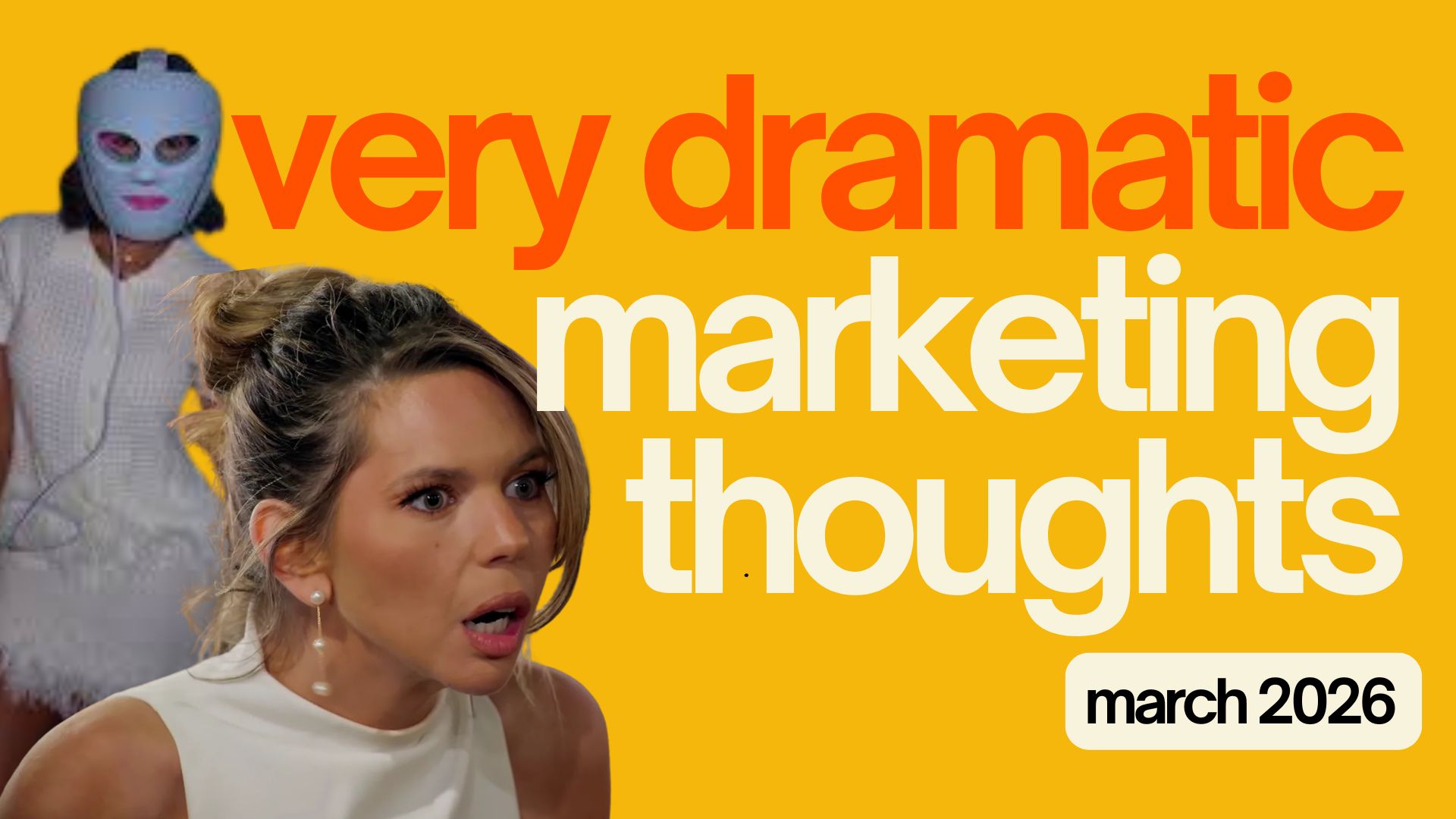
Which is where Shark feels like they’ve taken it a step further. They’re not just asking “how do we show up at these events?” they’re asking “how do we actually own attention within these moments?” How do we make sure that when the camera cuts to the crowd, or when content is being created in the stands, there’s something distinct, something noticeable, something that actually ties back to us? Enter: Influencers wearing LED masks in the stands at the Miami Open.
I think that’s going to be the next wave of influencer marketing in sport. Not just presence, but visibility. Because people don’t care that your influencer is at the Aussie Open if they can’t tell they’re there for you. And as more brands move into this space, the bar is going to get higher very quickly. It won’t be enough to just be there. You’ll need to give people a reason to notice.
TBH, kinda the same learning applied to everything in marketing these days really. Showing up isn’t enough on it’s own.
a 3-year-old and the power of branding
Final quick thought to cap off March. I was at the pub with friends and their kids, and one of the kids – three years old (yes… 3) – saw a Peter’s logo on a fridge and immediately said she wanted ice cream. No product, no imagery, no context. Just the logo. And I was like… that is both incredible and slightly terrifying.
Because at three, you’re not analysing, you’re not comparing options, you’re not even really thinking. You’re just recognising and associating. Which means somewhere along the line, that brand has been embedded so deeply that a logo alone triggers a want. And that doesn’t happen by accident. That’s years of consistency, repetition, visibility. It’s showing up in the same way, over and over again, until it becomes familiar enough that your brain doesn’t even question it anymore. It just knows. Even if that person has not even fully developed their brain yet.
We talk so much about performance marketing and short-term wins – clicks, conversions, ROAS – all the things you can measure instantly. But this is the other side of it. The bit you can’t always track as easily, but in my opinion – matters a LOT more.
Because that’s what happens when branding *actually* works. And seeing it play out in real life like that was such a reminder of how powerful that is. Slightly scary, sure. But also kind of the ultimate goal no?
And with that, we’re done for March! See you next month – slightly more rested thanks to two long weekends (god bless), and likely back to questioning how it’s already May.
Enjoy your Easter, and may fuel prices be kind to everyone heading off on a road trip this long weekend.
